The Alhambra of Granada, the Last Moorish Stronghold in Spain

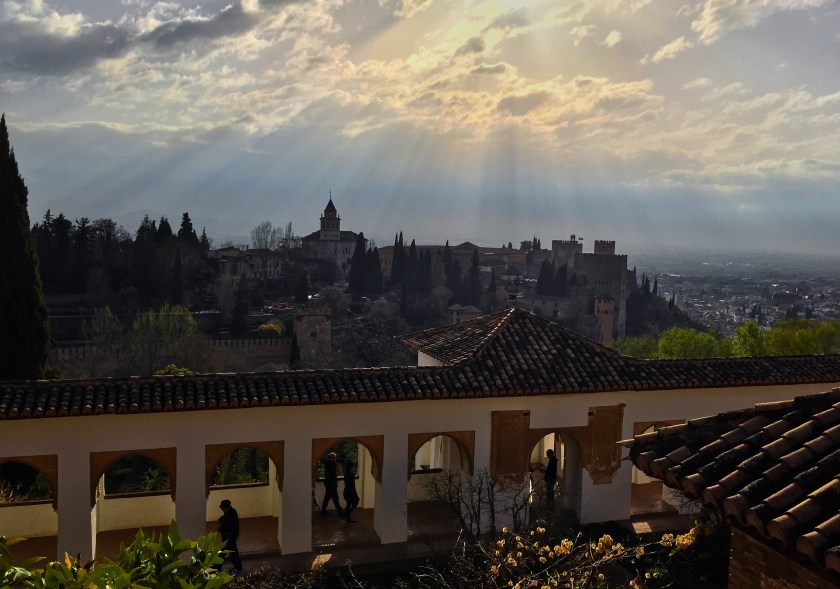
Granada is one of the best places to explore Moorish civilization in Spain. Above all attractions–the flamenco shows, tapas, fresh market, old town walking tour–the highlight of the city is the Alhambra, one of the finest Moorish palaces in Europe, the last stronghold of Moorish kingdom in Spain. Granada could be done in one day with an intense schedule, but why? We were there for two days, it was nice to slow down, smell the roses.
065

The Alhambra consists of the Palacio Nazaries (The Nazarid Palace), Generalife Gardens and Alcazaba fort. The Nazarids were ethnic groups of Spanish Muslims who ruled the last Moorish kingdom till 1492. The palace is the absolute highlight, a beacon of light in the Dark Ages of Europe. Be aware that the admission ticket is often sold out because of the restriction of the number of visitors per day. So purchase your ticket online EARLY and your allotted time shown on the admission ticket. Don’t be the sad left-out tourists who miss the main sight!

The most striking element of the palace was water, the purest symbol for life.  Ceaseless cascading flow, elegant dancing fountains, quiet mirror-like reflections, water was the main theme.  This mere necessity of the modern life was true luxury in the dessert climate then.

Another obvious, different from other palaces we visited in Europe, was there was NO personal portraits or deity paintings anywhere in this palace.  Moorish people forbid idol worship, instead the palace was decorated with intricate patterns and elaborate geometric shapes and wonders, which covered EVERY square inches of the marble walls, tile floors and wood ceilings.

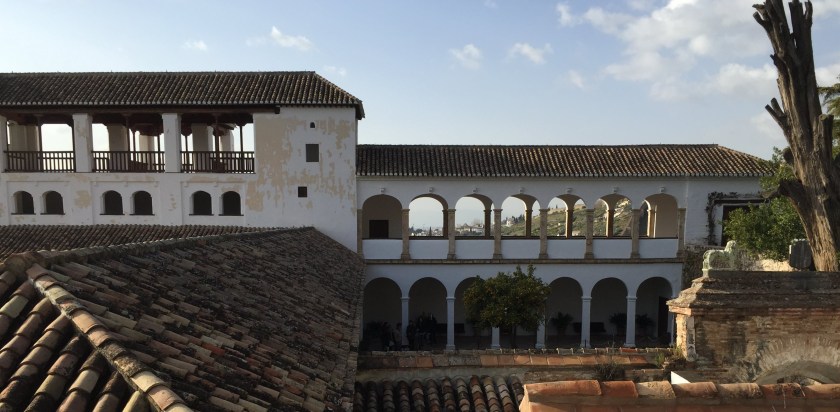
Generalife was the area outside of palace, including the manicured Gardens. At the end of the garden was a small summer palace.
IMG_1111

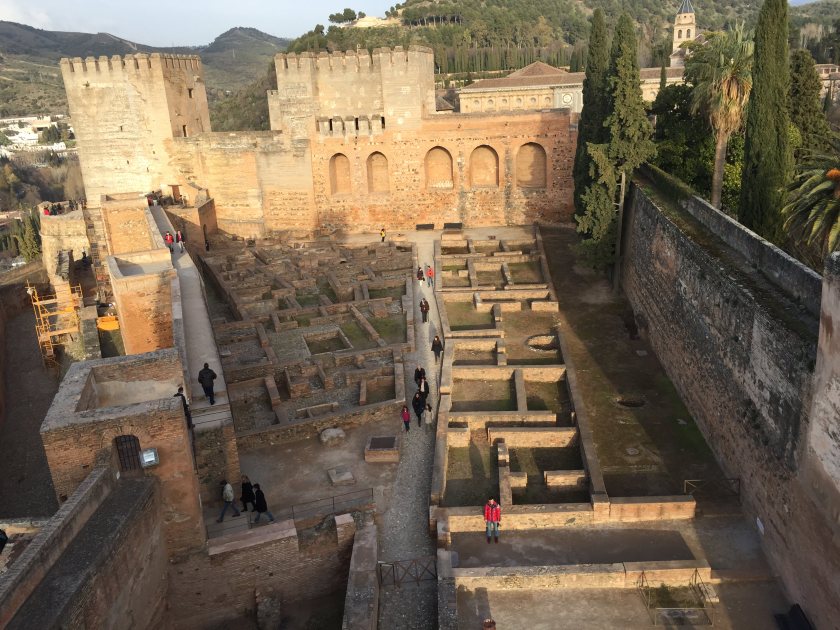
The Alcazaba fort was quite empty, but from the top we could overlook the city of Granada.
IMG_1157

At the night fell, the palace became a mysterious place.


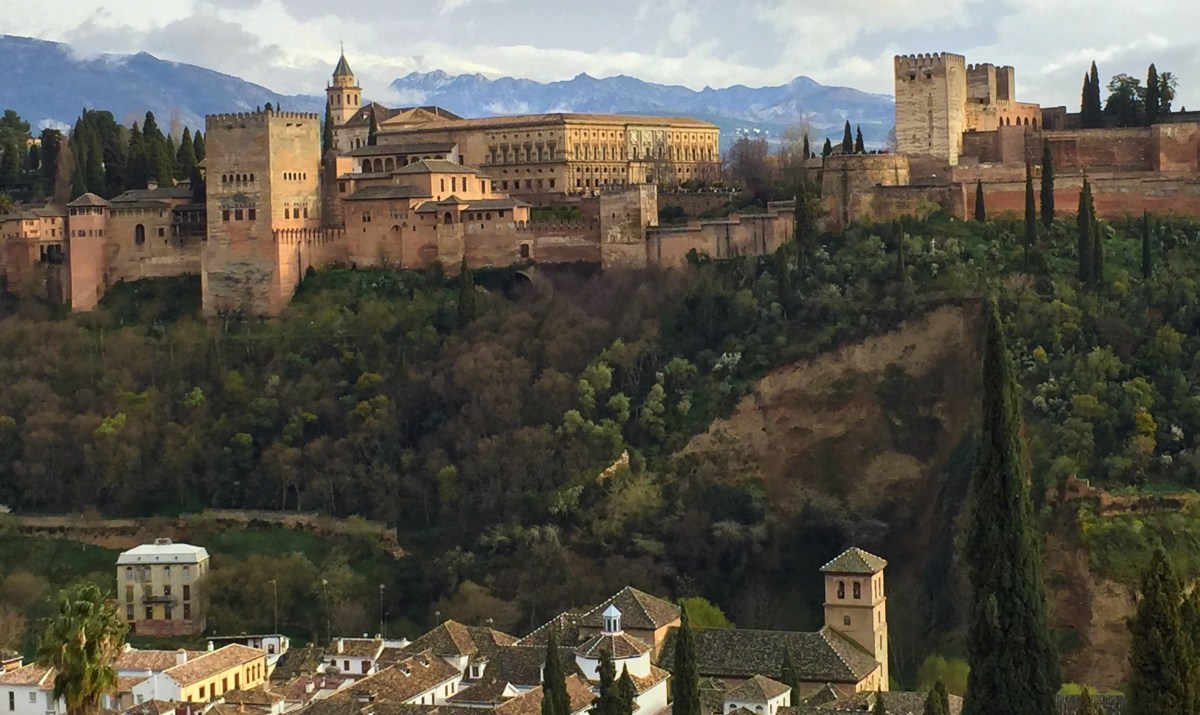
The best sunset view of the Alhambra was from the San Nicholas Viewpoint on the hill across from the palace. Go early to find a nice spot. Be patient, the reward would be a view you wouldn’t easily forget!  With the palace glistening in the golden light, strong and dignified, I understood why the Christian Charles V (the Holy Roman Emperor who ruled as Charles I over Spain), the king who conquered Granada, chose to siege the palace to force Moorish into surrender. This was his way to show his respect to this splendid palace and preserve its glory.

Two more minor points:

Granada was very walkable. But taxi was very cheap if you were tired of walking.  The local people here didn’t speak much English, similar in other southern parts of the Spain we visited, definitely less than the people in Barcelona. So be sure to download a English-Spanish dictionary on your phone, it proved to be very useful for us.

We did this trip, just the two of us, because our children had gone there with their Spanish classes the year before. We started out from Madrid and surrounding cities, such as Avila, Segovia and Toledo, then took a train to Seville, continued to Granada, and flew out from there to Barcelona afterward. The airport at Granada was not very big, only a dozen flights a day. A train to Barcelona would be a much preferred transportation in the hind sight, however our schedule didn’t allow us to do that.

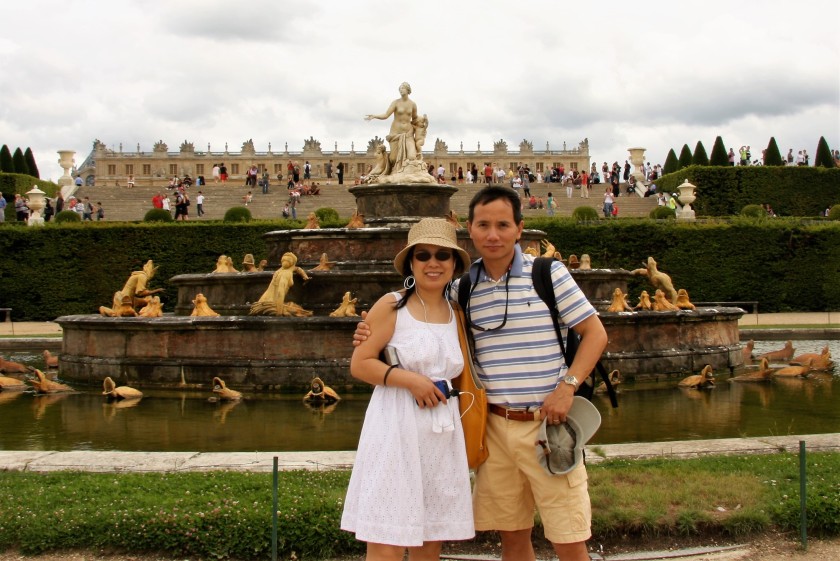
This trip gave us a chance to try a selfie stick for the first time.  You could tell we had a ball, haha.


Chateau de Versailles, the Palace of Louis XIV

Few years ago we took a day trip to Versailles while vacation in Paris. Every time I think of that trip, the first image comes to mind is the Gardens of Versailles, not the museums of Paris. And I LOVE Paris, who doesn’t.

There are three major sights in Versailles: the Chateau, the palace itself; the Gardens around the palace; and the Domaine de Marie-Antoinette, the pastoral area away from the palace.

Versailles is huge and has many visitors in any given day. Smart travelers buy tickets online to avoid the ticket-buying lines and get there early to avoid the crowd.  The Versailles “Le Passport” Pass includes both tickets for the Chateau and the Domaine and an audio guide.  The Gardens have free admission, so have children under 18. We had the Paris Museum Pass, which included the admission tickets but not the audio guide.  So we downloaded Rick Steves’ self-guided tour on our iphones. It worked out well.

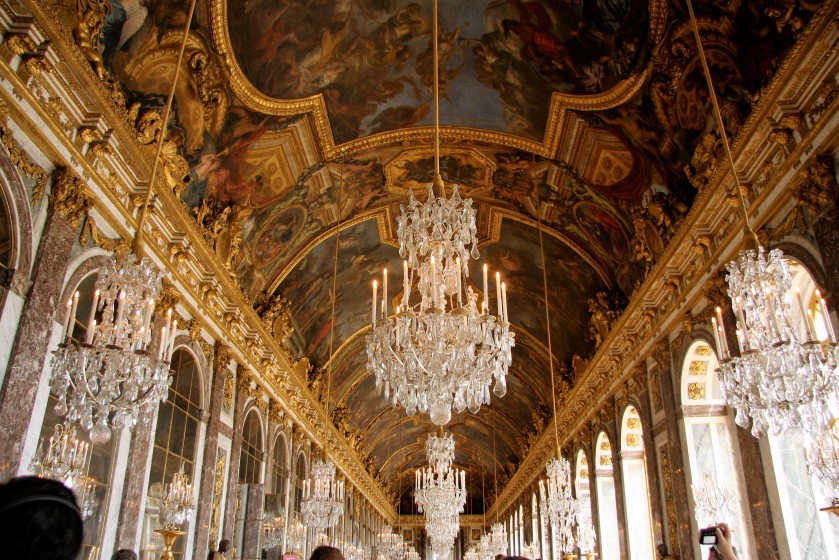
The Chateau was built by Louis XIV, the Sun King (1638-1718). His bedroom with the three arched windows beneath the clock (the left photo) faced the rising sun.  The 72-year reign of Louis XIV, longer than any known sovereign, ushered France into her golden age. This grand Chateau was not only the palace but also the seat of French government. This epic-scale Hall of Mirrors showcased the then #1 dominant power in Europe.

img_8401r

Louis XV and XVI also resided here. Sadly, it was from this palace King Louis XVI and Queen Marie-Antoinette were captured and taken up to the guillotine during French Revolution (1789-99) which overthrew the French monarchy.

Louis XIV reminded me of Kangxi emperor (1654-1922) of China’s Qing Dynasty.  Not only they ruled in the similar eon, he was also the longest reigning emperor in China, 61 years! The era name Kangxi 康熙 literally meant “Peaceful Harmony”.

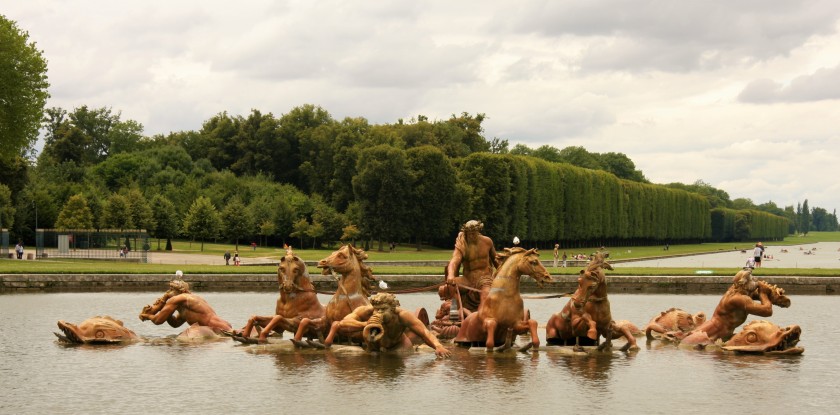
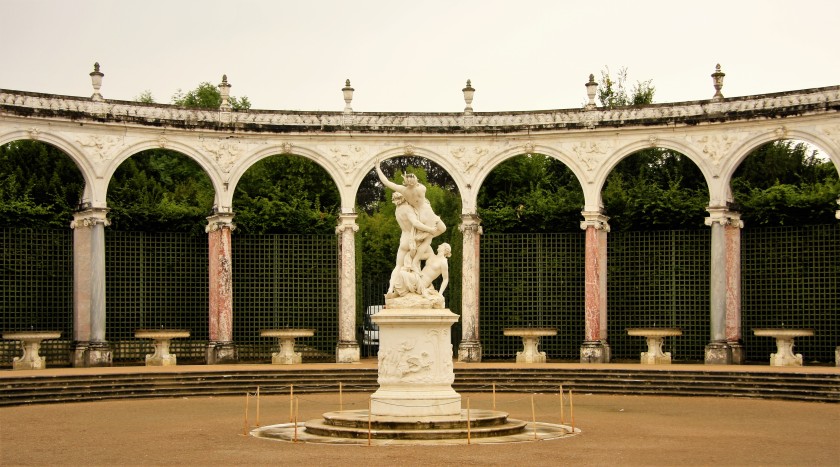
King Louis XIV loved outdoor. He took care of his Gardens as he did everything else in the kingdom: in total command and doing the unthinkable. The Orangerie showcased his thousands of orange trees growing in chilly France.

We rented bikes for about €8/hr. It gave us the freedom to bike away from the crowd, and retreated to the Domaine de Marie-Antoinette. The bike ride was very pleasant.

According to Rick Steves’ “Europe Through the Back Door”, if you plan to visit just one palace in Europe, make it Versailles. How glad I am to have followed his advice, and not disappointed!

img_8470r

img_8524r

img_8461r


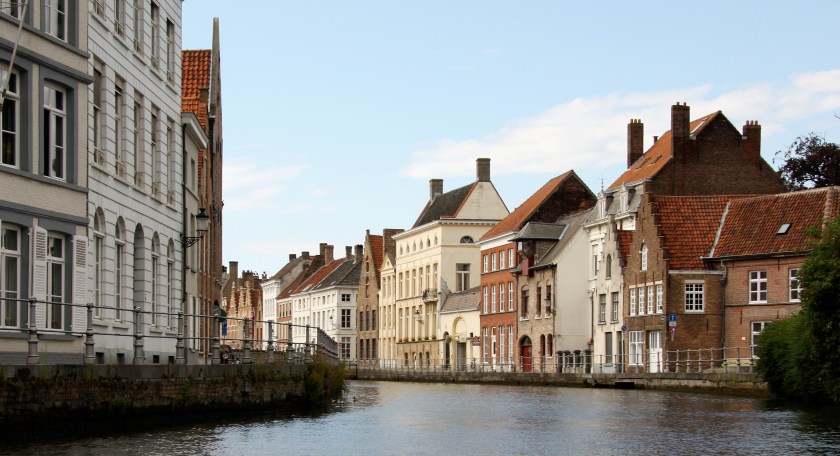
Bruges, the Venice of the North

Bruges (broozh) in English, or Brugge (BROO-ghah) in Flemish, is a popular tourist town in Belgium. Through small, less than one square mile, Bruges is packed with charm. Our family visited there the summer of 2009.  It took about three hours with fast train from London.  The train dropped us right in the center of the town, and there were plenty taxi at the station to take you to hotel.

We stayed at Hotel ter Reien, at the top floor suite overlooking the Huidenvettersplein Canal.  I highly recommend this family-owned budget hotel: great location at the town center, although in the center of the action, the hotel was quiet; the owners were very friendly, they served delicious home-made breakfast.

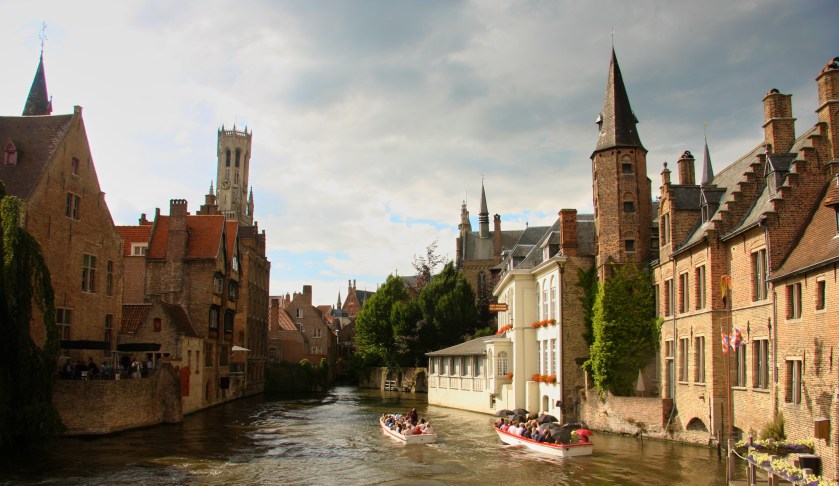
For sights and attractions, the Bruges by Boat was a must. It was a relaxing and scenic tour with the captain narrating. Bruges was quite photogenic from the canal.

img_7545

img_7541rimg_7513-2

There were two renowned Squares.  Burg Square was the political and religious heart of the town, a popular place for outdoor concerts during summer night.  Carillon bells could be heard every fifteen minutes.  Make sure to visit “Basilica of the Holy Blood” at the square (below, left). This church was built by the crusaders who had brought back the drops of Christ’s blood in 1150. For a small donation, we touched the vial containing the blood!  Tourist trap or not, we WERE tourists. 🙂

Talking about church, another memorable one was Church of Our Lady (above, right), made famous by the white marble Madonna and Child by Michelangelo. This was the only Michelangelo statue to leave Italy in his lifetime, a testimony of the wealth and power of Bruges in her heyday.

Bell Tower (Belfort) stood over the Market Square.  Around the Market Square, you could find many eateries and shops. Make sure to try frites, the Belgian-style fries. As detrimental to health as frites actually were, Belgians took pride in creating the frites. They were deep fried twice, first round to cook the potato strips, second round to crisp and brown them, the frites were traditionally served with mayonnaise, not ketchup. They might clot my arteries, but boy, they were heavenly with a capital H!

Another snack to try in the Market Square was the pickled herring, and ate it the Dutch way!

For dinner, moules, the Belgium mussels, were a must dish. We ordered ours with white wine (vin blanc), and with shallots (mariniere).  Ever since the trip, the Belgium way has become the only way for me to cook mussels at home. Of course, pair them with dark Belgium beer.

Another delicacy, and great gifts to bring back home, was Belgian chocolate.  Freshly made and sold the same day, Belgians know how to make divine chocolate. The best ones were from Dumon just off Market Square. After Belgium it was hard to go back to American chocolate, no offense Hersey.

My last advice was to pack a warm jacket even in the summer months.  We were there in mid July, the highest of the day was in the 60s. We had to cancel our biking trip because it was too cold!

How to Loose a Tea Brick

Many of my friends have a beautiful tea brick somewhere inside the house.  It may be a gift received or purchased during one of the China trips. However it just sits there because they haven’t figured out how to chip a small piece off the brick as recommended or suggested.

Are you one of them? Loosing the tea brick is actually easier than you think.

You need:

  1. a steamer pot with a perforated stack, the pot should be wide enough to hold the tea brick flat.
  2. water, at least an inch deep in the pot, but not too deep to touch the tea tray
  3. a mitten
  4. a flat tray, as a working surface for breaking and drying the tea. I use my cookie sheet lined with paper to absorb the moist.
  5. tea jar and/or any container, to store the loosened tea

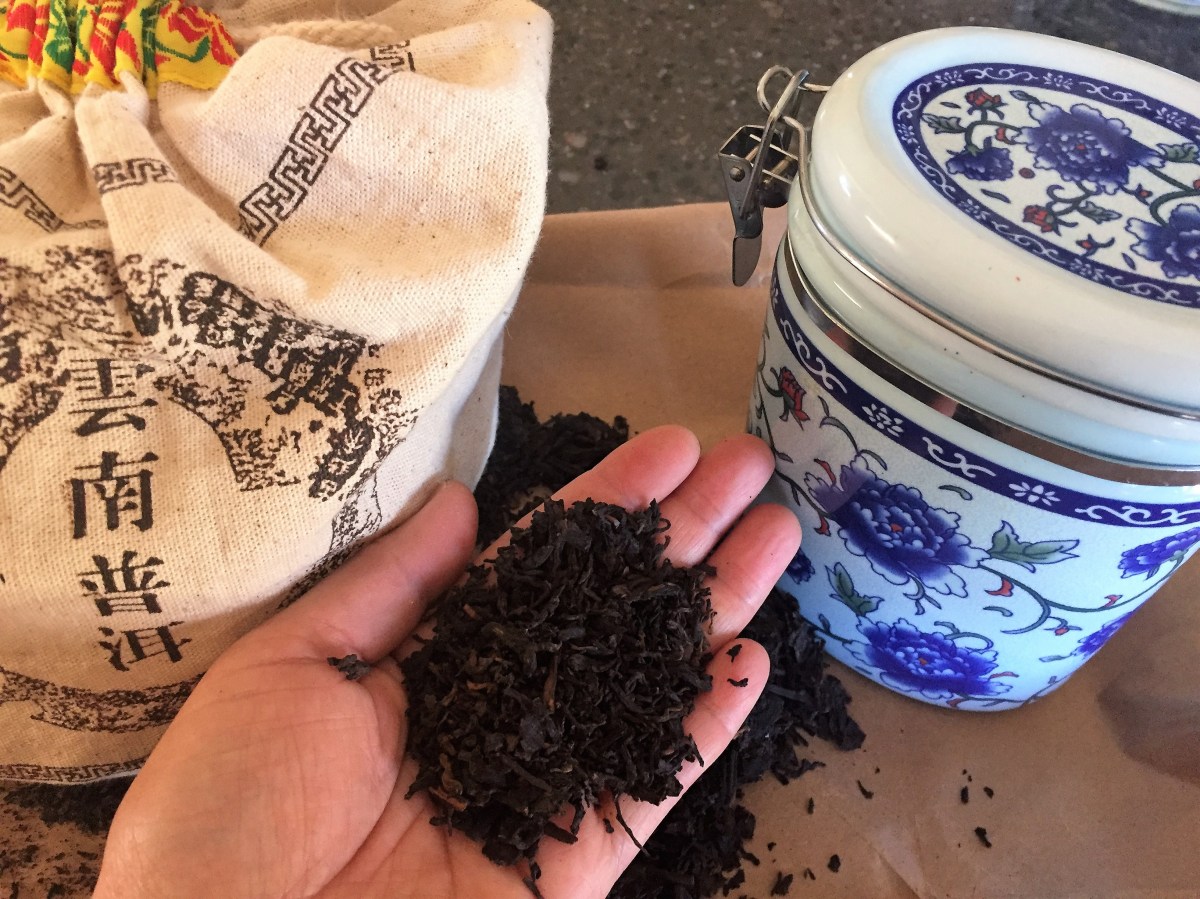
First, prepare the steam pot by bringing water to boil.  Then carefully (hot steam) put the tea brick on the steamer stack, close the lid.  Set a timer for FIVE minutes.  That is right, all you need is to steam the tea brick for no more than five minutes!

While the tea is being steamed, get your mitten ready.  When the time is up, use your mittened hand to take the tea out to the tray.  The edge of the brick will be slightly bendable and center still solid. Work QUICKLY with both hands. Start from the edge, breaking your way into the center of the brick. Once the broken pieces cool, they turn harden again; so you only have a few minutes of workable window.

I didn’t take any pictures while actually working on the tea brick.  Too busy!

Five-minute is a good time frame for my round pu’er tea brick, less than an inch in thickness. If your tea is thicker or thinner than mine, you may need to adjust one minute more or less of steaming period. As we all know, tea making is a delicate process.  The brief steaming here is to loose the binding of the tea only. Never we want to introduce excess moist, which will create all sort of problems, such as taste change, or worse, mold growth etc.

After the broken pieces cool and dry, it is time to store them away.  I usually put the chunks in a cloth bag and the loose tea into a jar.  Always use the loose tea first.

Well, I hope this article help and good luck with your tea brick! If you like, I appreciate you hit “like” at the bottom of this blog, and give me your feedback and thoughts. Bon AppeTEA!


Cuban Food, Cigars and Coffee

Cuba lies 90 miles south of Key West, FL, between the Cayman Islands and the Bahamas, to the west of Haiti, east of Mexico and northwest of Jamaica.  Now I have been to each island mentioned above, except Haiti.  (hmm… Haiti)

Although this was my first time to Cuba, it was the 30th times for our team.  Year after year they showered compassion to the Cuban people providing the Cuban churches with generous material and spiritual support long before the lift of embargo. Each year new members were added to the Cuba team, we were so privileged to be part of this wonderful group.

Each year the team experienced a bit differently than the year before.  This time we stayed at the two beautiful guesthouses.

Barbara was the hostess of one guesthouse, and also our cook for breakfast. Each day breakfast began with a plate of fresh fruits of papaya, banana, guava and pineapple slices. Toasts were served with butter and home-made pineapple marmalade, the best I’ve ever had! Eggs were either fried or scrambled; probably because of our language barrier, Barbara thought “sunny side up” meant “natural” or raw egg.   Huh… no… I didn’t want to swallow a raw egg in the morning. 🙂

Barbara also served us deliciously home-made juice, such as papaya, guava or pineapple, and coffee. A word for Cuban coffee, it was STRONG! A little cup of the Cuban coffee would keep me going for a whole day! Coffee was served black, with sugar and/or heated whole milk. By the end of the week, I grew addicted to Cuban coffee.

Lunch at church was usually a simple sandwich with ham and cheese. Naturally we opted for lunch from street vendors in downtown Havana. This fried chicken (three pieces) costed only two dollars, juicy and full of flavor.

We had lunch out once at Matanzas. Great pork!

For something to munch on while scrolling the street, you might pick a bag of Churros for half a dollar or Corn on the cob with mayonnaise or a sprinkle of salt.

In Cuba, we used bottled water for drinking as well as for brushing teeth. The rule for shower in our guesthouse was to turn off the water whenever you were not ACTIVELY rinsing; otherwise you would suffer the consequence of running out of hot water.  I am speaking from my personal experience.  Also check whether you had water in the tank BEFORE you used the commode, otherwise you might risk have nothing to flush with.  Again, my personal experience. 🙂

Rice and Beans was Cuban’s staple dish.  We had rice and beans almost every night at church.  In my opinion, New Orleans had the best rice and beans, Cuban version came very close as the runner up. Our chefs knew how to make delicious Chicken and pork; we were told that beef and seafood were not readily available/affordable for common people.

Our last dinner was at a Chinese restaurant “Tien Tan 天璮饭店” in China town. If you missed seeing the archway at the entrance to Chinatown, you would not have guessed you were in China town. There were very few Chinese people and the structures of the many buildings resembled anything but China town. My hubby and I were the only Chinese we saw. 🙂

Finally, a few words about gifts.  Cuban cigars and coffee were the gifts we brought back home, they were easily available in Old Havana. Since the ease of travel to Cuba,  US customs lifts the import limits on Cuban cigars. If you are new to Cuban cigars, “Romeo y Julieta” and “Cohiba” are two popular brands. Also the coffee we purchased at the Old Havana tourist area was the identical price as in local market.